
Blog
Chaos versus a system
You know the drill. The customer’s contact details in a spreadsheet, the history of the conversation in e-mail, notes in a document and half-finished quotes on a shared drive. The customer calls and you start a marathon between applications to dig out what you need.
The average employee spends 30 minutes a day looking for data that already exists somewhere. That is roughly 10 hours a month — more than a full working day lost to data chaos. And it is not only time: missing or stale details cost real opportunities and damage customer relationships.
It gets worse as the company grows. What worked for 5 clients fails at 50, and becomes a serious problem across hundreds of relationships. At that point it has stopped being an inconvenience and become a structural brake on growth.
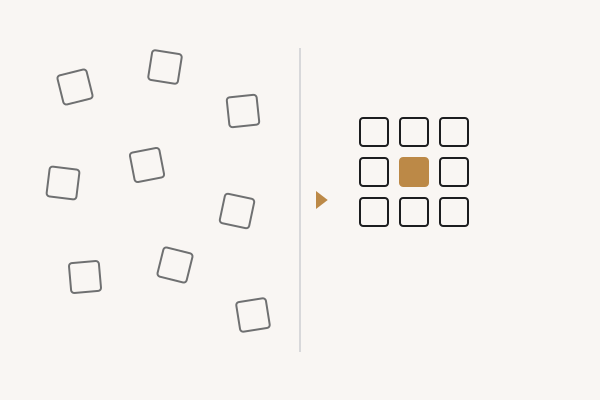
How do you get out of it?
A system that actually works does not start with code. First we have to understand your processes and what you need. From that analysis we build something that matches your company exactly — no features you will never use and no compromises. The result is steady delivery and a system that fits the way you already work.
A system that fits
What does a system like that give you?
- All the data in one place, with immediate access to a complete view of a client.
- Automation of routine steps, such as follow-up e-mails and reminders.
- An immediate overview of your customers, including preferences and any other details you define.
- Effective management of the sales process — from first contact to long-term care.
- Decisions backed by data, from accurate reports and analysis.
- Whatever else your operation needs.
Worried that moving to a new system will be hard? It does not have to be. We design it to be legible at a glance: the screen tells the user what to do next, without long training sessions and manuals. The system puts you back in control of your data and frees your hands for the work that matters — relationships, planning and developing what you sell.
First step
Dealing with this right now?
We start with a fixed-price analysis. The output is yours, even if you build with someone else.