When a new system comes up, plenty of companies hesitate. A new system? Sounds good — and then the familiar question arrives: “But what if…?”
- “Will it be hard to train people?”
- “Will it be too expensive?”
- “Will we lose data?”
What we rarely hear is: “What if it frees our hands?” or “What if it lets us grow faster?”
Fear of change usually comes from a bad experience. But there is something worse than a bad change: no change at all.
What companies tend to overlook is the real cost of staying on an outdated solution — lower efficiency, capped productivity and a slow loss of ground to competitors. Companies rarely fail because they changed the system; they fail because they were afraid to.
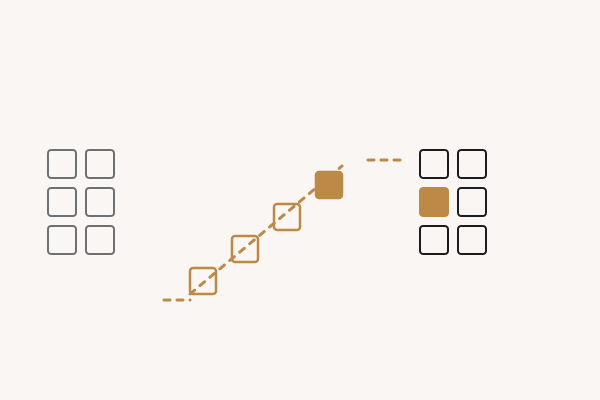
Switching does not have to be a leap
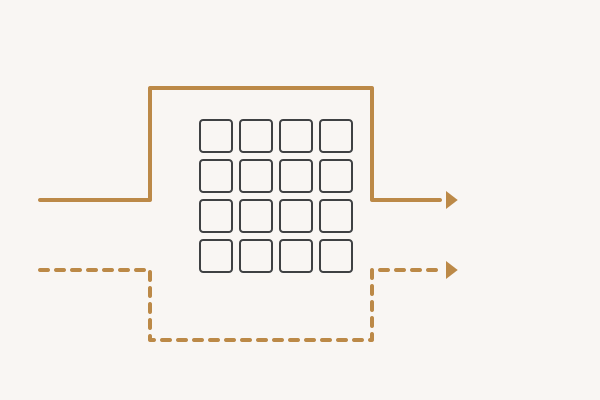
Going live no longer has to be one risky event. Migration is additive: the new state is built beside the old one and switched over once it passes acceptance.
- The old state keeps working until the new one proves itself.
- Data moves across in parts, not all at once and blind.
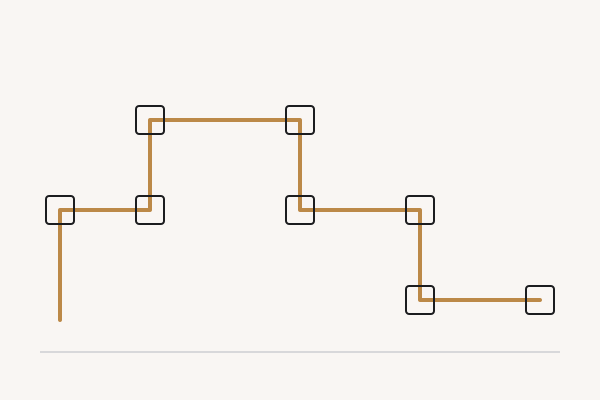
- When the rollout is controlled and phased, the move is smooth and measurable.
Recognising the right moment to change, and having the nerve to do it, is what separates companies that grow from companies that stall.
What you get
A system should make the work easier, not add to it. Designed properly, it gives you:
- automation of routine steps,
- screens shaped to the roles on the team,
- connection to the tools you communicate in,
- access from a phone, for work anywhere.